
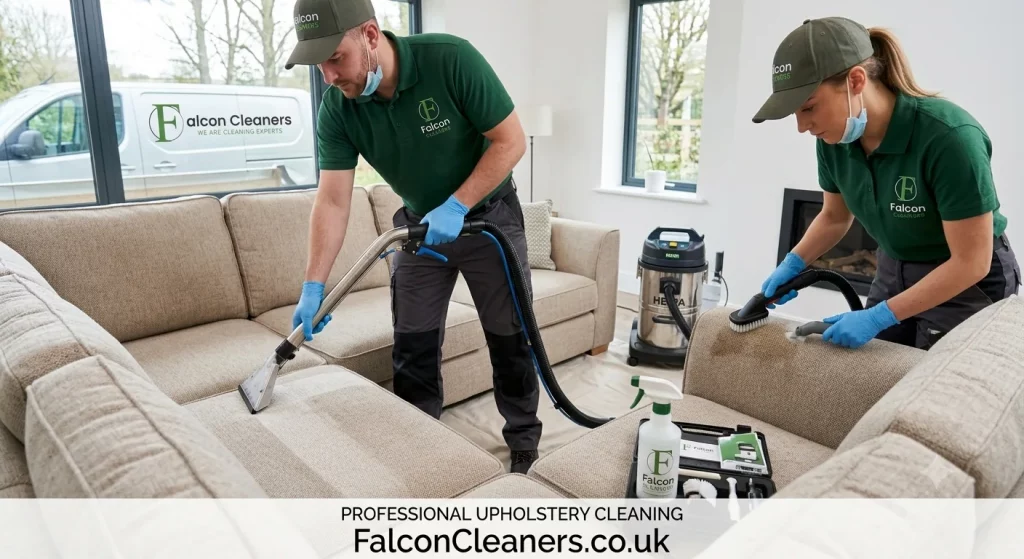
Your sofa takes more punishment than almost anything else in the house. It absorbs body oils, hair products, crumbs, pet dander, spilled tea and the general dust of daily life, and unlike a carpet, most people never think to clean it until it looks visibly grubby. By that point the soiling has usually worked deep into the foam, which is exactly where it becomes hardest to shift.
The good news is that fabric furniture responds very well to a bit of routine attention. Here is how to look after yours properly, what to do when something gets spilled, and how to tell when it is time to bring in a professional.
Why upholstery gets dirtier than it looks
Fabric is a filter. Every time someone sits down, air is pushed out of the cushion, and when they stand up, air is drawn back in, carrying dust and skin cells with it. That cycle happens hundreds of times a week. A sofa that looks fine from across the room can be holding a surprising amount of debris in its padding.
You will usually notice three signs before anything else. The seat cushions darken slightly compared with the back cushions. The arms develop a faint sheen where hands rest. And the room starts smelling stale a day or two after you have aired it. All three point to soiling in the fabric rather than on it.
The weekly ten minutes that makes the biggest difference
Most upholstery problems are prevented rather than solved. A short weekly routine will keep a sofa looking good for years longer.
Start by taking the cushions off and vacuuming the base of the frame, including the crevices where the arms meet the seat. Use the upholstery attachment rather than the bare hose end, which can stretch and mark the fabric. Vacuum both sides of each cushion, then flip and rotate them so the wear spreads evenly across the piece.
If your cushion covers are removable, resist the temptation to machine wash them unless the label clearly allows it. Many covers shrink just enough on a warm wash that they never quite fit again. Check the care code on the label first, and when in doubt, leave them alone.
Dealing with spills without making things worse
The single biggest mistake people make with upholstery is rubbing. Rubbing pushes liquid deeper into the foam and frays the surface fibres, which leaves a dull patch even after the stain itself has gone.
Blot instead. Press a clean white cloth straight down onto the spill, lift, move to a dry part of the cloth and repeat. Work from the outside of the spill inwards so you are not spreading it wider. For anything solid, lift it away with a spoon edge before you touch the liquid.
Once you have removed as much as you can, resist the urge to soak the area with a household spray. Over wetting is the usual reason a small spill turns into a large brown ring, because the moisture carries old soiling up from inside the cushion as it dries. If you do use a mild solution, apply it to your cloth rather than the sofa, and always test on a hidden section first, such as the back of the piece or underneath a cushion. Dry the area with a fan or an open window rather than a hairdryer, as heat can set protein based stains permanently.
Pets, and the smells that come with them
Pet owners face two separate issues. Hair and dander sit on the surface, and oils from fur work into the fabric over time. A rubber glove dragged across the seat will lift hair far more effectively than a vacuum alone. For the oils, there is no home remedy that really works, and this is usually the point where a professional hot water extraction clean earns its keep.
If there has been an accident, act quickly and blot rather than scrub, then let a professional handle the follow up. Odour from urine sits in the foam and the frame, not just the cover, so surface treatments only mask it for a few weeks.
When to call in a professional
As a rough guide, a family sofa in daily use benefits from a professional clean every twelve to eighteen months. A lightly used piece in a spare room might stretch to three years. Sofas in households with pets, small children or anyone with allergies do better on an annual schedule.
Professional upholstery cleaning uses hot water extraction, which injects a controlled amount of cleaning solution into the fabric and immediately draws it back out along with the soiling. Done properly, the piece is left damp rather than wet and dries within a few hours. The equipment matters, but so does knowing which fabrics tolerate water at all, since some velvets, silks and viscose blends need a solvent based approach instead.
It is also worth booking a clean before a big occasion rather than after. Fresh soiling lifts far more easily than soiling that has been sat on for another six months.
A quick word on fabric protection
Fabric protector applied after a clean does genuinely help, but it is not a force field. What it does is slow the rate at which a spill soaks in, which buys you the minute or two you need to blot it up. Reapply it after each professional clean rather than assuming the original factory treatment is still working.
Book an upholstery clean with Falcon Cleaners
We are a family run, fully insured and DBS checked team covering Berkshire, Buckinghamshire, Oxfordshire, Surrey and London, and every job comes with our 100% satisfaction guarantee.
If your sofa needs more than a vacuum, give us a ring on 07763 803002 or get a free, no obligation quote at falconcleaners.co.uk/get-a-quote. We are always happy to advise on whether a piece is worth cleaning before you commit to anything.