
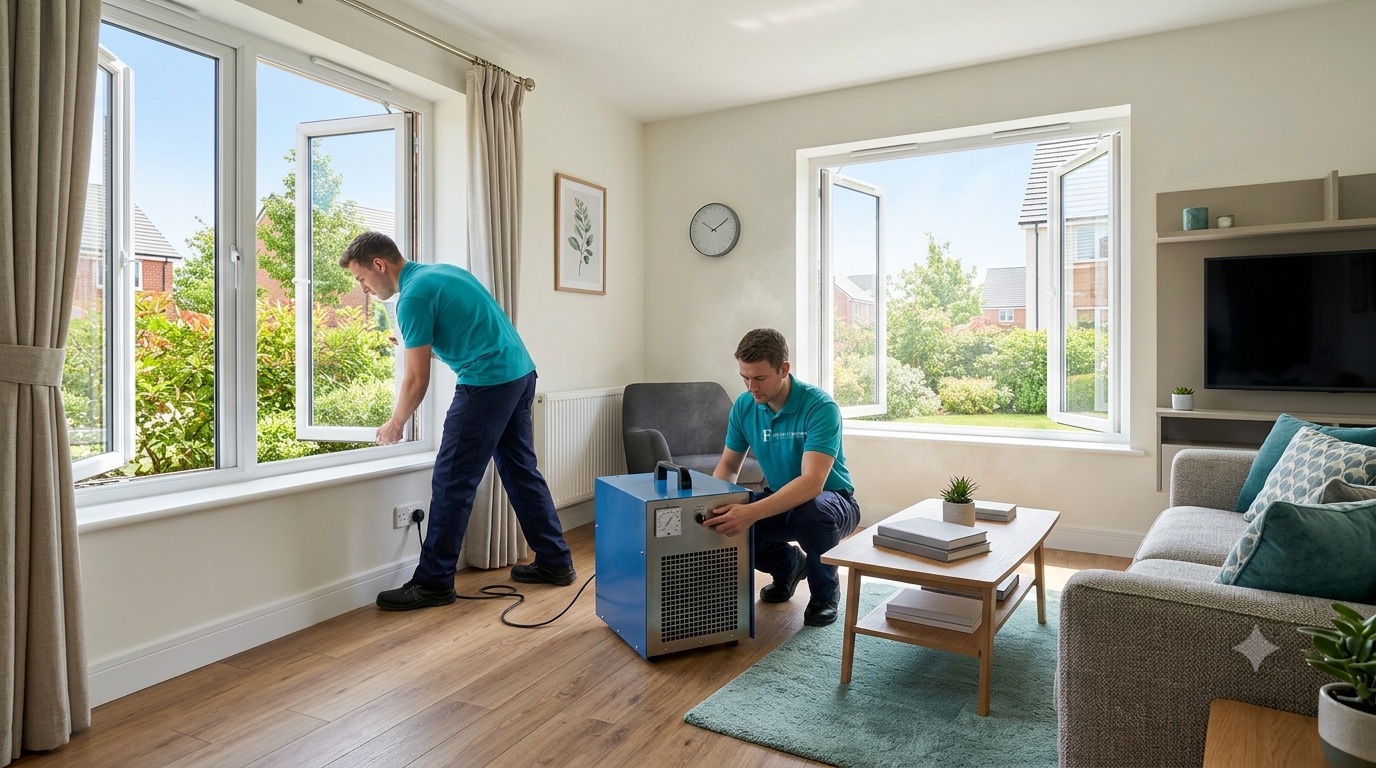
Every home develops smells, but some of them refuse to leave. Cigarette smoke that outlasts three redecorations. Pet odour that returns every humid day. The musty note of old damp, or the curry that moved in permanently with the previous tenant. If you have burned through candles, plug-ins and “odour eliminator” sprays and the smell keeps coming back, here is the truth: you cannot mask your way out of an odour problem. Real odour removal means destroying the odour molecules at their source, and that is a science. Here is how professionals do it.
Why stubborn smells keep coming back
Smells are physical: microscopic molecules released by a source, riding on the air. Persistent odours hang around because the source has soaked into the property itself, nicotine tar in paint and plaster, pet urine deep in carpet underlay, smoke residue inside wall cavities, damp spores behind furniture. Air fresheners add a nicer molecule on top for a few hours; the source keeps emitting underneath. Which is why the smell always wins… until the source is treated.
Step one: find and remove the source
Professional odour removal starts as detective work. Where is the odour actually held? For cigarette smoke it is typically every soft furnishing plus the walls and ceilings themselves. For pet accidents, UV inspection often reveals historic staining invisible to the eye, soaked through carpet into underlay and even floorboards. For damp and mildew, the moisture problem has to be fixed or the smell will simply regrow. Whatever can be washed, extracted or removed gets dealt with first, deep cleaning of carpets and upholstery by hot-water extraction, washing down of hard surfaces with specialist degreasers, disposal of unsalvageable underlay or materials.
Step two: neutralise what remains
After source removal, professionals attack the residual odour with equipment you cannot buy in a supermarket:
- Ozone generators: flood the empty room with O₃, which chemically oxidises odour molecules in the air and inside soft materials, then breaks back down into ordinary oxygen
- Hydroxyl machines: a gentler alternative that can run in occupied spaces, breaking odours down over a longer treatment
- Thermal fogging: a fine deodorising fog that penetrates cavities, cracks and fabrics exactly the way smoke did
- Enzyme treatments: biological cleaners that digest organic odour sources such as pet urine, rather than just covering them
- Air scrubbing: HEPA and carbon filtration that pulls particles and odour from the air during and after treatment
The right tool depends on the odour: ozone excels on smoke and fire odour in empty properties, enzymes are the only real answer to pet urine, and damp smells are solved by fixing moisture first, treatment second. A professional assessment matches the method to the problem: a big part of why DIY attempts with a hired “ozone box” so often disappoint (and can be unsafe if used in occupied rooms).
The odours we treat most often
Cigarette and cannabis smoke: the classic end-of-tenancy problem; walls washed, fabrics extracted, then ozone treatment before redecoration. Pet odour: enzyme treatment of affected areas, carpet and upholstery extraction, and honest advice when underlay is beyond saving. Damp and mildew: moisture source fixed, affected areas cleaned with antimicrobials, then deodorised. Cooking odours: degreasing of kitchens and extraction systems, where years of vaporised oils hold the smell. Trauma, waste and drains: specialist biohazard cleaning first, then clinical-grade deodorising.
Landlords and sellers: the smell is costing you money
Agents will tell you bluntly: odour kills viewings. Prospective tenants and buyers decide in the first thirty seconds, and a property that smells of smoke, pets or damp gets discounted or skipped no matter how good it looks in photos. A professional odour treatment between tenancies, often done in a single day alongside an end of tenancy clean, routinely pays for itself in faster lets and better offers.
What to expect when you book
We assess the property (photos are often enough for a quote), identify the sources, and agree a treatment plan. Most domestic odour jobs take between half a day and two days including treatment cycles. Ozone treatment requires the space to be empty of people, pets and plants during the cycle. We schedule it so disruption is minimal, and ventilate fully before handback. The result is a property that smells of nothing at all, which is exactly what “clean” smells like.
Frequently asked questions
Is ozone treatment safe?+
Can you remove cigarette smell without redecorating?+
How much does odour removal cost?+
Preparing your property for odour treatment
A little preparation makes treatment faster and more effective. Where possible, remove or wash items you already know are affected, bedding, curtains, cushion covers, and clear access to the worst areas. For ozone treatment, plan for the space to be empty of people, pets and plants for the treatment window plus ventilation time; for a typical room that means arranging to be out for a few hours, not days. If the odour source involves an ongoing problem: a leak feeding damp, or a pet still having accidents, fix or manage that first, otherwise even a perfect treatment is only ever a pause.
DIY or professional: an honest comparison
For a light, recent smell, one burnt dinner, a single pet accident caught immediately, fast DIY action with enzyme cleaner and ventilation genuinely works, and we would tell you so. Professional treatment earns its fee when the odour has had time to soak in, when it survives repeated cleaning, when redecorating is at stake, or when a tenancy change or sale gives you a deadline. The equipment gap is real: a domestic carpet washer and a supermarket spray cannot match truck-mounted extraction, commercial ozone generation and thermal fogging, and unlike another round of scented products, a professional treatment ends the problem rather than postponing it.
Got a smell that will not quit? Send us the details on 07763 803002 or request a quote, and get your fresh, neutral home back.