
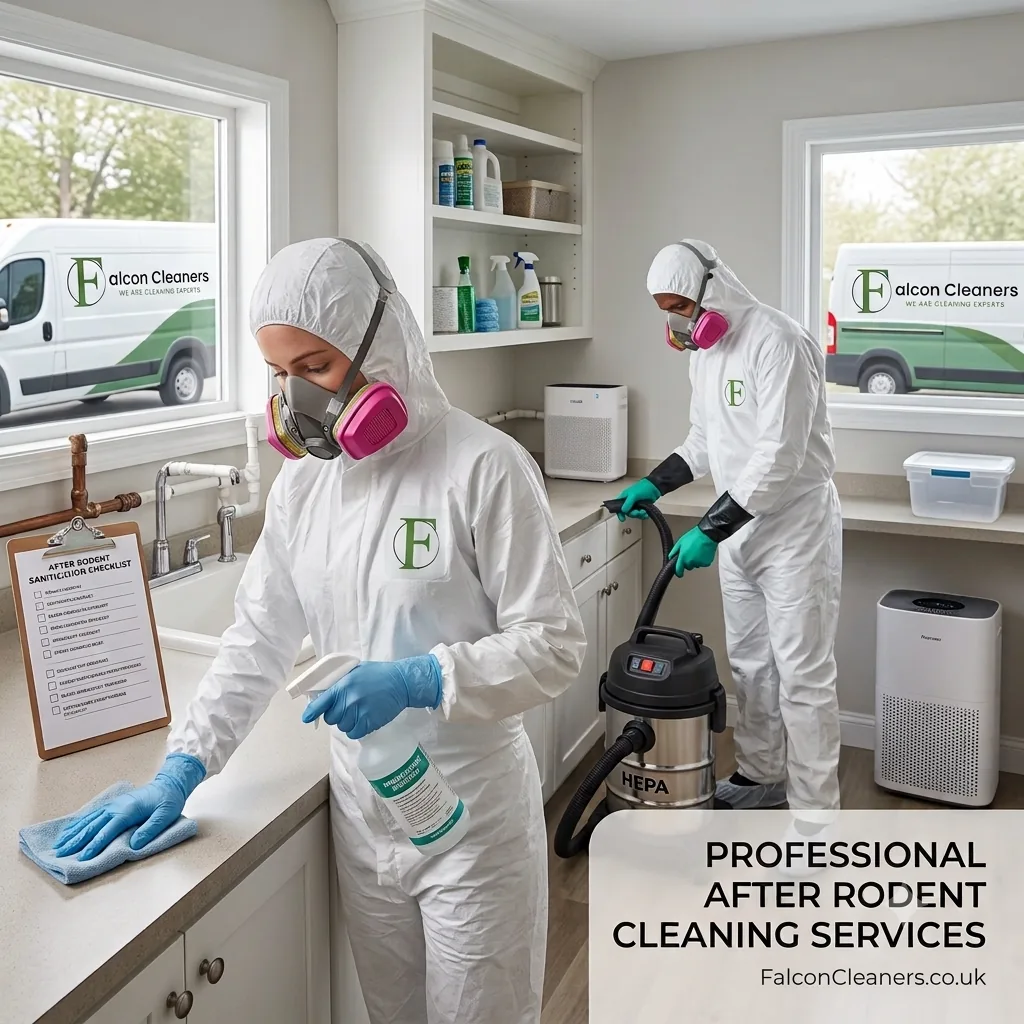
The traps have worked, the pest controller has been, and the scratching in the walls has finally stopped. Job done? Not quite. Getting rid of rodents is only half the job. Mice and rats leave behind droppings, urine, nesting material and grease trails, and that residue is not just unpleasant, it is genuinely hazardous to your household’s health. Proper after-rodent cleaning is the step too many people skip. Here is why it matters and how it is done safely.
What rodents actually leave behind
A single mouse produces dozens of droppings a day, and urinates almost constantly as it moves, marking runs along skirting boards, inside cupboards, across worktops and through wall cavities. Add shredded nesting material, greasy “smear marks” along their routes, gnawed food packaging, and sometimes carcasses in inaccessible spots, and even a short infestation leaves a property far more contaminated than it looks. Most of it is invisible: urine dries clear, and droppings collect in the exact places you never clean, behind appliances, under units, in lofts and under floorboards.
The health risks are real
Rodent waste can carry a number of diseases that affect humans, including:
- Leptospirosis (Weil’s disease): spread through rat urine, and potentially serious in humans
- Salmonella: transferred to worktops, dishes and food from droppings and paws
- Hantavirus: rare in the UK but present, and linked to disturbed, dried rodent droppings
- Allergens and asthma triggers: rodent dander and dried waste degrade indoor air quality, especially for children
The danger peaks, ironically, when you clean the wrong way. Sweeping or vacuuming dry droppings with a normal vacuum throws contaminated dust into the air, where it can be inhaled. That is precisely how rodent-borne illness is most often picked up indoors, and why the professional method looks so different from a normal clean.
How professional after-rodent cleaning works
1. Survey. We trace every affected area, not just where you saw the mice, but the runs, nesting sites and contamination in lofts, voids, kick-boards and behind appliances.
2. Safe removal. Wearing appropriate PPE, the team dampens contaminated material with disinfectant before removal, never dry-sweeping, and uses HEPA-filtered vacuums so nothing harmful is thrown into the air. Droppings, nests and any carcasses are removed and disposed of through licensed waste routes.
3. Deep disinfection. Every affected surface is cleaned and treated with professional-grade disinfectant: floors, skirting, cupboards inside and out, worktops and storage areas. Where urine has soaked into porous materials, we treat with enzyme cleaners that break down the residue: the same residue whose scent can attract the next generation of rodents back in.
4. Odour neutralising. That musty, ammonia-like smell is eliminated at the source rather than masked, important both for comfort and because lingering scent-marking acts as a welcome sign to new rodents.
5. Prevention advice. We point out entry points, gnaw damage and attractants we found along the way, so you (or your pest controller) can seal the property and break the cycle for good.
Don’t forget the kitchen
If rodents had access to your kitchen, treat every surface and item they could have reached as contaminated. Cupboard interiors need emptying and disinfecting, dishes and utensils washing at high temperature, and any food in gnawed or unsealed packaging must go. It feels drastic. It is also exactly what environmental-health guidance says, because salmonella transfer from packaging to plate is a short journey.
When is it worth calling professionals?
A couple of droppings behind one cupboard is a job you can handle carefully yourself, gloves, disinfectant-dampened paper towels, and bagged disposal. Call in a professional team when the infestation was established or widespread, when contamination reaches lofts, voids or ductwork, when someone vulnerable lives in the home, or when it is a rental property that needs documented sanitisation between tenants. Landlords and letting agents use this service routinely for exactly that reason.
Frequently asked questions
Do you remove the rodents too?+
How soon after pest control should I book the clean?+
Is the treatment safe for children and pets?+
Can you clean lofts and wall cavities?+
Rental properties, HMOs and business premises
For landlords and letting agents, after-rodent sanitisation is not optional between tenancies, advertising a property where droppings remain in cupboards or under units invites complaints, deposit disputes and environmental-health attention. A documented professional clean, with photographs and confirmation of the products used, protects everyone and reassures incoming tenants. The same applies with extra force to food businesses: after a rodent issue, kitchens and storage areas need verifiable deep sanitisation before an EHO inspection, and the paperwork matters as much as the clean itself. We regularly provide exactly this for cafés, restaurants and shops across the area.
How to check the job was done properly
Whether you clean yourself or bring in professionals, the finished property should pass three simple tests. First, the sniff test: no musty, ammonia-like odour anywhere, lingering smell means lingering residue. Second, the torch test: shine a bright light along skirting boards, under units and inside cupboard corners, no droppings, no greasy smear marks along the walls. Third, the fresh-evidence test: lay a strip of flour or paper overnight along former runs; any new tracks mean the infestation itself is not over and pest control needs another visit before deep cleaning is worthwhile. Professionals do a version of all three before signing the job off.
Had mice or rats? Make the house genuinely safe again. Call 07763 803002 or book an after-rodent deep clean across Berkshire, Buckinghamshire and West London.